- Kindly Do not Post Job, Raw Material & Personal Enquiries

How Does the Third-Party Pharma Manufacturing Process Work
Key Takeaways
- Third Party Pharma Manufacturing India helps pharmaceutical businesses manufacture medicines without investing in their own production facilities.
- The process begins with product selection and formulation development, followed by raw material procurement and manufacturing.
- Quality control and quality assurance testing ensure medicines meet the required quality and safety standards.
- Final packaging and labelling protect products while supporting brand identity and regulatory compliance.
- Choosing a reliable third-party pharma manufacturing company is essential for consistent quality, timely delivery, and long-term business growth.
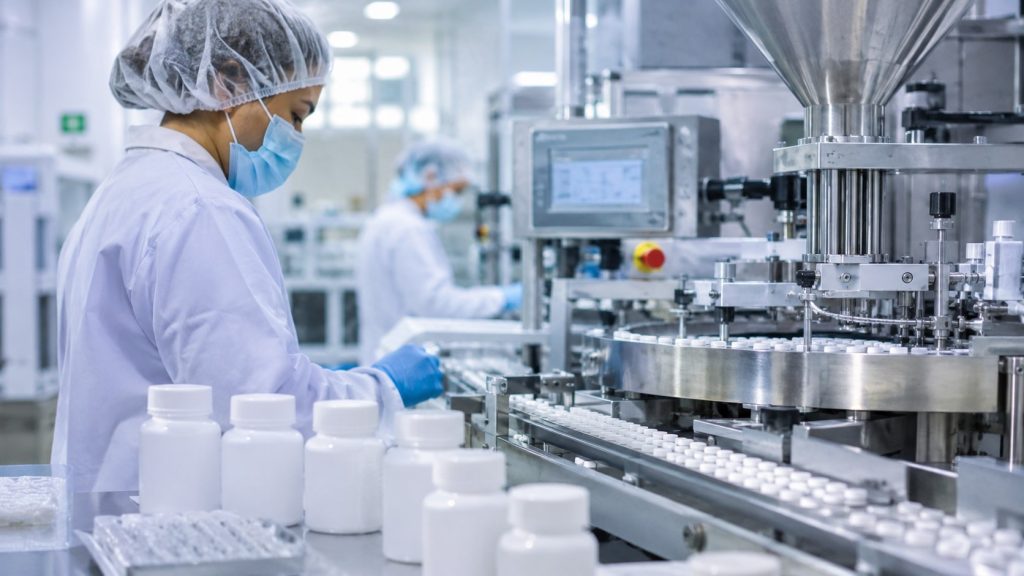
How Does the Third-Party Pharma Manufacturing Process Work from Formulation Development to Final Packaging? – The pharmaceutical industry is thriving, and enterprises seek dependable methods to produce medicines of excellent quality without spending too much on building their own plants. That is when Third Party Pharma Manufacturing India comes into play. It allows pharma enterprises, startups, distributors, and pharma marketers to create their medicine brands by associating themselves with seasoned manufacturing companies.
However, have you ever considered the processes that go into producing medicines and bringing them to the market? From choosing the appropriate formulation and sourcing new ingredients to testing quality and packaging the medicines, each stage requires detailed planning and technical know-how.
Having knowledge about the process of third-party pharma manufacturing can help companies make the correct decisions for manufacturing partners. Let us delve deep into the process of third-party pharma manufacturing.
Table of Contents
What Is Third Party Pharma Manufacturing?
Third party pharma manufacturing is the collaboration between a pharma company and a manufacturing unit wherein the former entrusts the latter with the manufacturing of its medicines. In place of constructing the plant, buying equipment, and hiring production employees, a pharma company gets its products manufactured.
The items are generally marketed and sold using the customer’s own branding, depending on relevant agreements.
This solution proves helpful for organizations in need of:
- Reduced investment in pharmaceutical manufacturing.
- Modern manufacturing facilities.
- Quality products and testing.
- Increased choice of pharmaceutical formulations.
- Quick expansion and market entry.
Given the increasing need for affordable and quality drugs, Third Party Pharma Manufacturing India has proved to be a good choice for both pharmaceutical startups and established organizations.
Step-by-Step Guide to Third Party Pharma Manufacturing
Knowing all stages of manufacturing helps you better assess the potential partner organization in this sphere. Let us review the path that a drug usually takes, starting from the very idea to its completion.
Production Selection and Requirement Discussion
The process begins with choosing the pharmaceutical products that you are planning to produce. Based on the market and company needs, you can choose to manufacture tablets, capsules, syrups, injections, ointments, or other dosage forms.
Among others, at this stage the manufacturer discusses with you:
- Product formulation and strength.
- Formulation type and purpose.
- Packaging type needed.
- Order volume expected.
- Target Market and Delivery Timelines
Starting with a discussion of this aspect is vital to prevent misunderstandings and ensure the alignment of manufacturing processes to the needs of your business.
2. Development and Finalization of Formulations
The development and finalization of formulations is an essential stage of manufacturing of pharmaceuticals. This stage consists of defining the precise composition of APIs and excipients that will make the drug stable and effective.
Characteristics such as compatibility, dosage, stability, dissolution, and shelf life of the drug are evaluated by the formulation team.
Depending on the product, the development might involve laboratory tests, evaluation, and stabilization studies. Existing formulations can be chosen as well in case there is no need for customization.
An experienced manufacturer guarantees that formulations meet all the requirements according to pharmacopoeia and regulatory standards before proceeding to the commercial manufacturing stage.
3. Raw Material Procurement and Quality Inspection
Once the formulation is defined, the procurement of necessary materials follows.
Generally, this list includes active pharmaceutical ingredients, excipients, solvents, and other materials used for production. The manufacturer is supposed to buy raw materials only from approved suppliers.
Incoming materials are subject to quality control to check their identity, purity, strength, and compliance with predefined specifications.
Correct documentation and traceability are necessary because the quality of the product produced is based on the quality of the ingredients used to make the drug.
4. Manufacture and Production of Drugs
Once the raw materials are approved, commercial manufacture is initiated. The manufacturing process differs depending on the dosage form.
E.g.:
- Tablets – blending, granulation when necessary, compression, etc.
- Capsules – the approved formula is prepared and filled in proper capsules.
- Syrups – dissolution/dispersion, mixing, and processing.
- Ointments – blending through proper mixing/homogenization methods.
Manufacturers comply with proper procedures and Good Manufacturing Practices (GMPs).
In-process testing is done to control certain parameters and ensure batch-to-batch consistency.
5. Quality Control and Quality Assurance Tests
Quality testing is an integral part of the process of manufacturing drugs. Before a drug can be approved for packaging, certain tests have to be done.
These tests include:
- Testing of active substance identification and assay.
- Test for dissolution and disintegration.
- Microbial tests for limits.
- Test for uniformity of dosage units.
- Test for stability and physical appearance.
The aim is to verify whether the product under consideration complies with approved specifications concerning quality, strength, purity, and safety.
In compliance with GMP regulations, each batch should be properly reviewed and approved prior to release. Thus, no products can reach the market without passing quality controls.
6. Final Packaging, Labelling, Branding
After passing quality controls and getting batch release approval, the product goes through the packaging process.
Package protection provides medicines with the necessary safeguard against contamination, moisture, light, and other factors which can deteriorate their quality and make them unsafe for consumption.
The type of package depends on the nature ofthe product and can include:
- Blister packaging for tablets and capsules;
- Bottles for syrups and suspensions;
- Tubes for creams and ointments;
- Sachets for powders and granules;
- Other special containers for other types of dosages.
The packaging includes labelling that contains the necessary information about the product.
This is the point in time when the approved brand identity of the business undertaking the private label pharma manufacturing comes to fruition in terms of their product.
7. Finished Product Inspection and Product Dispatch
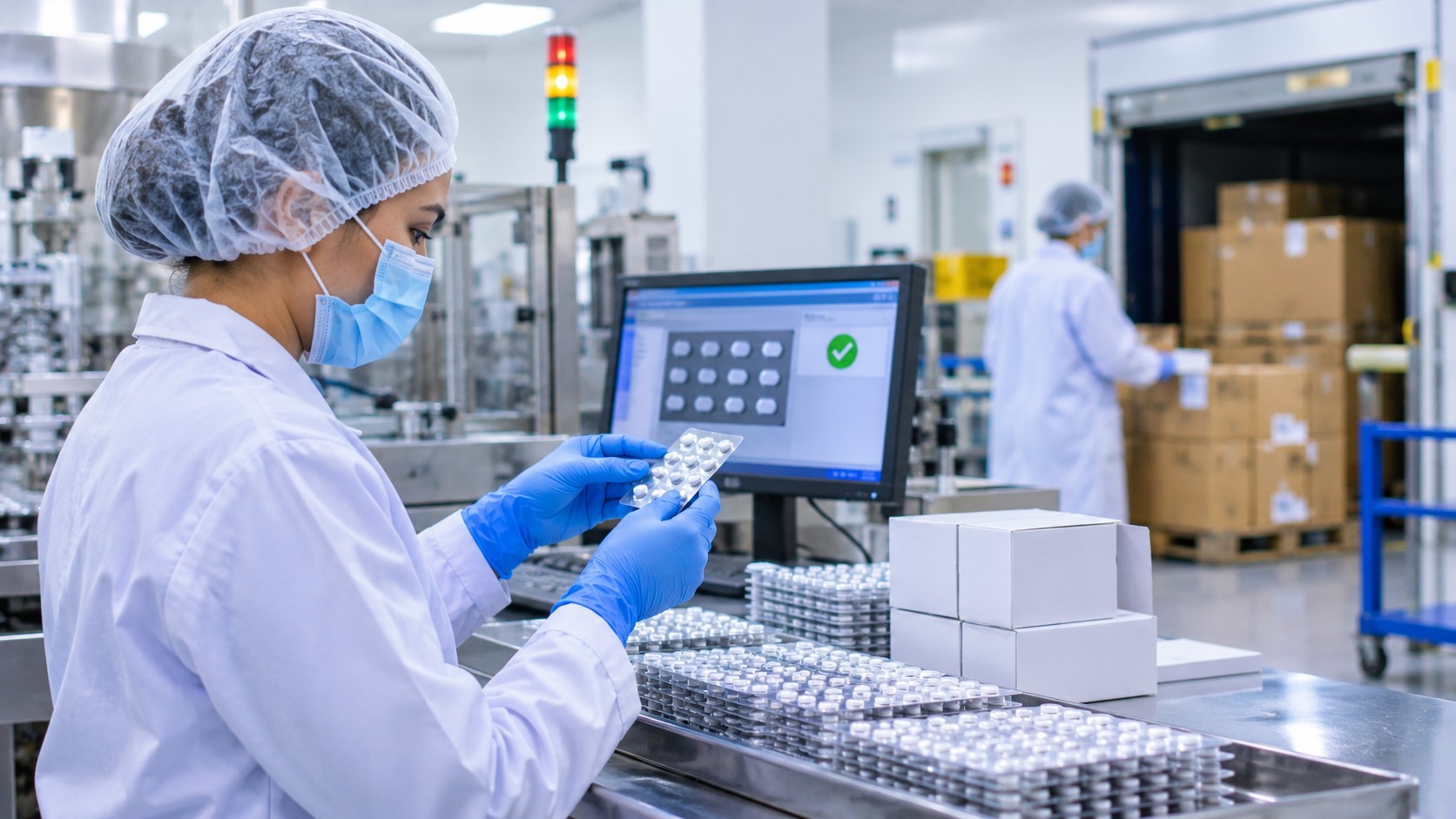
Before the dispatch of the finished products, the process involves packaging inspection and checking of quantity and documentation.
The manufacturer compiles batch records, test results, and documentation before the dispatch. The storage and transport of the finished product takes place under proper conditions to ensure that quality standards are maintained.
The finished medicines are dispatched to the client for distribution through their pharmaceutical marketing and sales network.
Why Outsource Pharmaceutical Manufacturing to Third Party Pharma Manufacturing India?
Outsourcing pharmaceutical manufacturing has certain business benefits associated with it.
- Saves on Infrastructure: There is no need to invest in setting up manufacturing units and purchasing equipment.
- Access to Professional Manufacturing: You get access to professional manufacturers with skilled people.
- Diverse Product Range: You can offer a wide range of products, including tablets, capsules, syrups, injections, and nutraceuticals.
- Concentration on Business Development: Outsourcing production allows you to focus on business development.
- Flexible Business Expansion: New products can be introduced step by step, along with exploring various market segments in the pharmaceutical industry depending on the needs of the business.
Never make the choice of a manufacturer based only on cost factors. Always verify the manufacturer’s licences, GMP compliance, product quality data, production capabilities, and shipping arrangements.
Conclusion
Making the right choice of a manufacturing partner plays a critical role in the success of your pharmaceutical business venture. Lifevision Healthcare provides third-party pharma manufacturing services for businesses that need pharmaceutical formulations, manufacturing, and packaging solutions.
If you already have a pharmaceutical business or plan to launch your medicine brand, visit the website and find out how Lifevision Healthcare can help you with Third Party Pharma Manufacturing India. Get in touch with the representatives to talk about your business needs.
Take Your Pharma Business to the Next Level with Lifevision Healthcare
Looking for a trusted partner for quality pharmaceutical manufacturing? Lifevision Healthcare offers third-party pharma manufacturing solutions to help pharma entrepreneurs, startups, and established businesses grow their product portfolios. Partner with an experienced team and turn your pharma business vision into reality.
Get In Touch With Us →FAQs
What is the first stage in third-party pharma manufacturing?
It is a discussion of the product requirements between you and the manufacturer. Formulations, dosages, packaging, quantities, and other specifics are selected in the process.
How long will the third party pharma manufacturing process take?
This depends on availability of products, formulation needs, raw material sourcing, order quantity, testing, and packaging approval. An order would normally take a few weeks, and customized formulations would take some extra time.
What are the documents required in case of third-party pharma manufacturing in India?
Typically, documents such as a valid drug license, GST number, company details, product details, and any other manufacturing agreement are common, among others, depending on the product.
Does third-party manufacturing involve packaging and labeling of the product?
Yes. Third-party pharma manufacturers provide packaging and labeling services as per the requirements of the client. These could be anything from blister packs, bottles, boxes, and product labels.
How do I choose the best third-party pharma manufacturing company in India?
Some of the important considerations could include licenses, compliance with GMP standards, qualified staff, quality control system, pricing structure, range of products, and delivery process.