- Kindly Do not Post Job, Raw Material & Personal Enquiries

10 Things Pharma Companies Should Check Before Partnering with a Contract Manufacturer in India
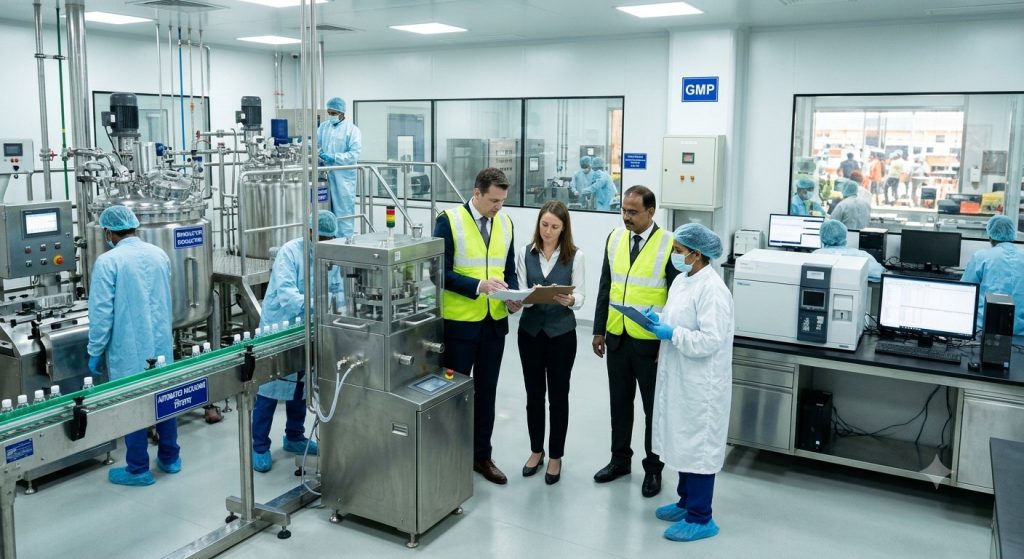
India is one of the major exporters of generic drugs around the globe, making India a preferred outsourcing destination for pharma brands. However, not all facilities provide the same quality. Working with the wrong contract manufacturer in India can cause issues like batch failure, delays in launching, and non-compliance, whereas working with the right one would mean having a trustworthy extension of your own team. Before entering into any kind of partnership, go through these 10 filters to select the best contract manufacturers in India.
Table of Contents
1. Licences and Approvals for Regulators
Check the paperwork first. Look out for the valid manufacturing licence and ensure that it has been issued by the state drug authority and CDSCO. All reputable contract manufacturers in India have no problem sharing it with you. It is important that you ascertain whether the manufacturer has the licence for the dosage form that you wish to produce, e.g., tablets, capsules, syrup, and soft gel capsules.
2. GMP & Quality Certification
GMP requirements should be embedded in the operations rather than just hanging a certificate on the wall. Check the audit history, inspection reports, and GMP standards that the partner adheres to from WHO. Various certifications like ISO demonstrate that the partner has a quality management system; hence, the reason why Lifevision Healthcare is an ISO-certified company. Also note the frequency of internal audits and corrective action monitoring.
3. Facilities & Infrastructure
Go to the manufacturing location yourself, or perhaps even perform an audit via a third party. Examine the production lines, clean rooms, storage rooms, and equipment maintenance records. Contract manufacturers that have R&D, pilot, and commercial areas in India will allow you to produce your product from trial batches to full-scale production without having to move from one plant to another.
4. Internal Quality Control
Pharmaceutical contract manufacturing requires that there should be testing of raw materials, processes, and final products. Check the quality control laboratory to see if it is an in-house lab, the instrumentation used, and how deviations are handled. Stability testing and batch records are also important. Good quality control will help you avoid any recalls and rejections
5. Diversity in Products and Technical Know-how
Match with the strengths of the manufacturer. Select a supplier who has the know-how of manufacturing tablets, capsules, syrups, sachets, and nutraceuticals and who can manufacture all these in one place so that you don’t have to deal with many suppliers. Also enquire about the technical expertise they have in your field and whether they offer formulation services along with manufacturing.
6. Capacity and Scalability
You may require only a small quantity of the product right now, but your requirement will increase over time. Ask your contract manufacturing company in India about monthly production capacities and availability of machines and management of a sudden increase in demand volume. Ask whether there is any effect of seasonal demands on lead times. An incapable partner will soon become an obstacle in your way.
7. Sourcing and Supply Chain of Raw Materials
Quality depends on inputs. See how suppliers are chosen and whether tests are carried out in the factory regarding the raw materials used. Third-party manufacturing must involve a transparent and documented sourcing of raw materials. Hence, you should examine the list of suppliers and their qualification process.
8. Packaging and Deliveries
Packaging ensures not only safe handling of your product but also a good image. Ensure packaging is leakproof, tamperproof, and properly labelled. Look at the schedule of delivery. Find out if the contract manufacturer in India can take care of the unique packaging needs of your brand. Bad packaging can harm your product and result in returns and unhappy distributors.
9. Transparency, Cost and Contract
Examine quotations from various suppliers, but note that lower prices may cost you more in the long run. Your contract will have to specify the minimum order quantity and price, among other terms like confidentiality and liabilities for unsuccessful batches. Sign a separate quality agreement in addition to the business one. Hidden costs are likely to be much higher than initial higher expenses.
10. Reputation and Communication
Look at client referrals and customer reviews as well as responsiveness when asking questions. Information about future industry trends can be obtained from such organisations as Pharmexcil or market insights from IBEF. Talk to existing customers if possible. The manufacturer in India that is communicative during onboarding will also be communicative when there is an issue.
Are You Ready to Work Together with a Reputed Contract Manufacturer from India?
Since 2010, Lifevision Healthcare has been helping pharmaceutical brands by providing quality-centric manufacturing in 8 speciality departments, with plants in Baddi (Himachal Pradesh) and offices in Chandigarh. Whether it is tablets or nutraceuticals, we can get your product line started.
Phone: 08062750200 | E-mail: enquiry@lifevisionhealthcarechd.com
Contact us at Lifevision Healthcare for a free consultation.
Conclusion
Outsourcing is easier if both the client and contractor have shared quality goals. Use this checklist as a screening criterion; evaluate every shortlisted supplier, do a plant visit, and do a document review prior to making a final decision. All efforts at due diligence are much more cost-effective than the cost of solving problems resulting from substandard quality.
Frequently Asked Questions
- What can be the biggest risk involved in outsourcing to a contract manufacturing firm in India?
Lack of quality control and compliance problems. They can be addressed through audits, appropriate quality agreements, and valid licences.
- Do I need to visit the manufacturing plant before signing the contract?
Yes. You will see the true picture of the working environment and documentation process not presented in brochures.
- How long will it take me to start production?
This will depend on the product formula, licensing, and packaging. Normally, everything is sorted out beforehand, so you should ask for a production schedule.
- Does a contract manufacturer equal a PCD pharma company?
No. The contract manufacturer manufactures drugs under your label, while the PCD company grants you the franchise to sell its product line.